


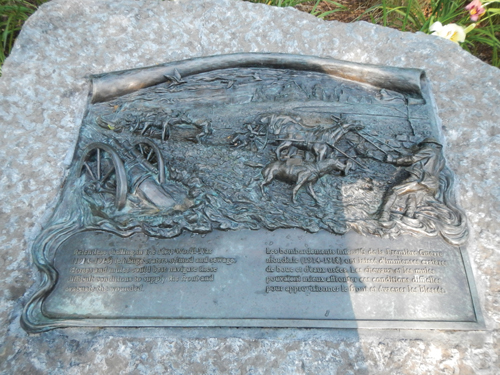
 This memorial includes three plaques and a statue, as well as animal footprints in the cement. For centuries, animals have demonstrated an enduring partnership with humans during times of war. They have served as means of transportation, beast of burden, messengers, protectors and mascots. Still today, dogs use their unique, sharply tuned instincts to detect mine clusters, and conduct search and rescue operations. We remember the contribution and sacrifice of all animals.
Relentless shelling in the First World War (1914-1918) left huge craters of mud and sewage. Horses and mules could best navigate these difficulties Paid Advertisement
Horses carried soldiers and pulled gun carriages, supply wagons and ambulances. Many paid the ultimate price and their loss was mourned by those they served.
Animals in War Dedication
The Animals in War Dedication honours animals that served alongside their human comrades in war. It is symbolically set next to the South African War Memorial, a battle for which Canada supplied 50,000 horses for mounted troops. Both commemorations are located in Confederation Park in downtown Ottawa. The footprints of dogs, horses and mules are stamped into the concrete of the Animals in War Dedication, representing the marks they left on the battlefield. Three bronze plaques depict animals in war and provide interesting facts about their roles, their sacrifices, and their unwavering loyalty. Among the roles animals have played in war:
- Mules: Carried panniers and artillery.
- Horses: Carried mounted troops and hauled field guns.
- Carrier pigeons: Delivered messages to specific destinations.
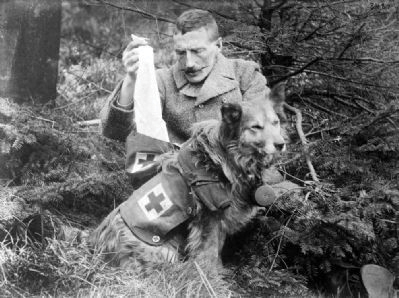
- Dogs: Used as messengers, medical assistants, bomb detectors, and search and rescue workers.
A bronze, life-sized statue of a medical service dog stands guard over the dedication. It is wearing an authentic replica of a medical backpack that war dogs used during the First World War. Canada’s military still employs dogs to this day.
Lloyd Allan Swick, a veteran of the Second World War and the Korean War, was the driving force behind the Animals in War Dedication project, which was realized in 2012 by Canadian artist and sculptor David Clendining.
Other nearby markers. At least 8 other markers are within walking distance of this marker. South African (Boer) War Memorial (here, next to this marker); Canadian Airmen Lost Over Poland (within shouting distance of this marker); Oscar Peterson (about 150 meters away, measured in a direct line); Marion Dewar Plaza (about 180 meters away); Brigadier Andrew Hamilton Gault DSO, OBE, ED, CD. (approx. 0.2 kilometers away); The National War Memorial (approx. 0.3 kilometers away); The Rideau Canal (approx. 0.3 kilometers away); Rail Heritage in the Capital (approx. 0.3 kilometers away).

Related Posts


