


 By Duke Chang
As social circles shrink and Canadians are increasingly disconnected, the number of Canadians giving to charities continues to decline — straining charitable operations across the country.
It’s very likely that you know of someone like Jessica: she’s 32 years old and shares a small apartment with her friend. Jessica was originally from a small town, but moved away from her family and friends right before the start of the COVID-19 pandemic to start a job. She was just starting to get to know her coworkers and going into the office every day. Then, the lockdown started and everyone was working from home. Since then, her company has transitioned to a remote work model, so unless she gets out to her local running club or plays pickleball with her roommate and their friends, she doesn’t often get the chance to meet new people. Jessica is also socially conscious and cares deeply about fighting against climate change but hasn’t yet donated, volunteered, or attended climate change protests to advocate for the development of good government policy to tackle this global threat.
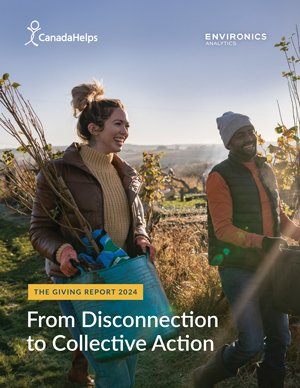 Jessica’s story is highlighted in the 2024 Giving Report by CanadaHelps and represents so many of the stories we have gathered from our research this year. She is an example of how so many Canadians are now interacting with the world around them: their social circles have shrunk and they have become disconnected, and while they care about social issues, their financial support for charities focused on the causes they care about is limited or nonexistent.
As we emerge from the shadows of the pandemic, a sobering reality awaits those of us in Canada’s charitable sector. Despite the growing complexity and urgency of societal problems, the fabric of giving in Canada is fraying at an alarming rate, it is having an adverse effect on giving, and it is threatening the health of our communities overall.
Fewer Canadians connected and giving
The seventh edition of The Giving Report, created in partnership with Imagine Canada and Environics Analytics, illuminates the eleven-year decline in the number of Canadians who are giving to charities. In 2010, tax filer data revealed that 23.4 percent of Canadians made charitable donations, but in 2021, that number had dropped to 17.7 percent.
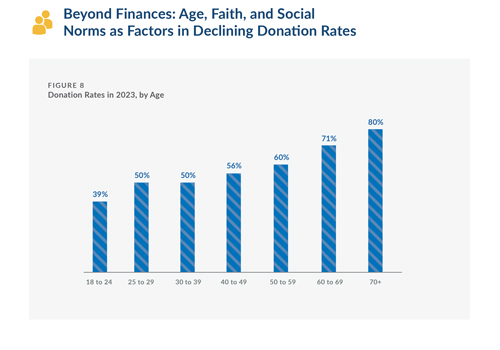
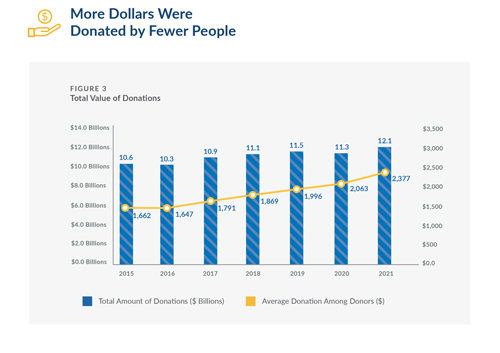 Some of the contributing factors have been widely reported, particularly ongoing economic uncertainty and the current affordability crisis. Other factors include the desire from some Canadians to receive more information from charities about the impact of their gifts, the declining number of religiously active Canadians (faith-based practices have been historically tied to charitable giving), and the continued trend of fewer Canadians from younger generations engaging in traditional forms of giving when compared to generations prior.
One trend behind the decline in donors which stands out in the new research — as illustrated in Jessica’s story — is that social circles are shrinking and Canadians are feeling less connected to their families, friends, neighbours, and communities. In 2013, the number of Canadians who reported having six or more close friends was 37 percent, but by 2022, that number dropped to 22 percent. In that same time frame, Canadians who reported feeling a strong sense of community belonging also dropped by 12 percentage points.
When we look at how these shrinking social circles are affecting giving, the correlation is clear. While just over half of Canadians (53 percent) who reported having very few close friends donate to charities, 84 percent of Canadians who report having many close friends donate. It’s clear that when we feel connected to our communities around us and foster positive, close relationships, we take a more active role in making change.
High demand for charitable services
The overall shrinking pool of Canadians giving is particularly concerning especially as the majority of charities are facing increasing demand for services.
Last year, CanadaHelps reported that more than half of charities (57 percent) were not able to meet demand, and we have not seen signs that this has improved. An Ipsos survey from CanadaHelps conducted in fall 2023 revealed that one in five Canadians are turning to charities to meet essential needs such as food and shelter. Of those relying on these services, nearly seven in ten (69 percent) were seeking support from charities for the very first time. Examples of this demand has played out at food banks across the country and reported in Food Banks Canada’s 2023 Hunger Counts Report which revealed that there were two million visits to Canadian food banks in March 2023.
As fewer Canadians are giving, charities are relying on a shrinking pool of funds to meet this demand which presents greater challenges. Charities that do not focus efforts on meeting essential needs such as food and shelter, but provide other immeasurable societal benefits, such as arts and culture organizations, community centres, education, and more are also at risk.
The Environment Paradox
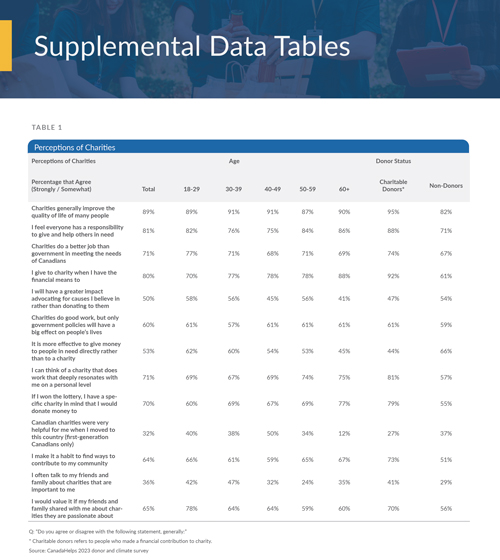
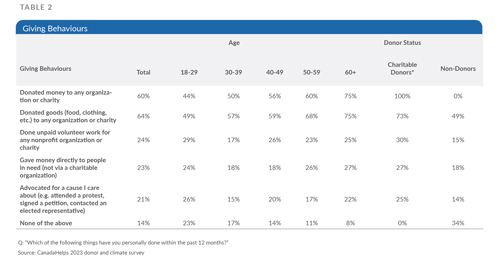
The Giving Report also reveals a troubling paradox — while Canadians report significant concern and anxiety about climate change and protecting the environment, very few Canadians actively engage in measures to do anything about it. According to survey findings, nearly half of Canadians (48 percent) report that they experience anxiety about climate change on a somewhat regular basis, and 32 percent of Canadians report that protecting and preserving the environment and fighting against climate change is a top cause for them.
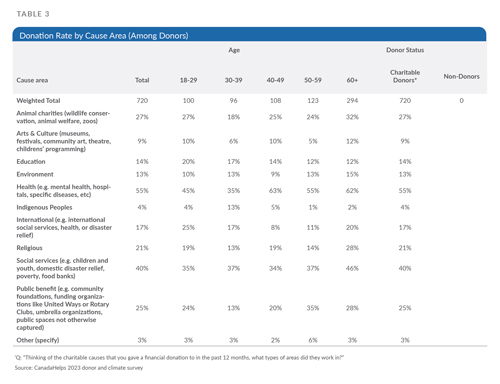
However, data indicates that this anxiety and concern isn’t translating into action. Processing close to half a billion dollars in donations annually, only 1.5 percent of donations made through CanadaHelps support charities focused on protecting the natural environment around us. To truly tackle climate change, we need to do more to ensure that organizations receive the critical funds needed to preserve land, advocate to government leaders for critical policy, provide education to children, protect wildlife, and so much more.
There is Hope
While the data presents a worrisome narrative, and as broader society struggles with the shift towards individualism, disconnection, and shrinking social circles, there are also signs of hope.
Canadians setting up a monthly donation to support their favourite charities continues to grow, increasing by 11 percent in 2023 compared to the year prior. Monthly donations give Canadians the opportunity to budget and strategically plan their giving; this is a critical channel of support for charities as it represents sustainable revenue that they can rely on for program planning throughout the year. Online giving also continues to grow, with donations nearly doubling on the CanadaHelps platform from 2019 to 2023, and gifts of securities increased by 32 percent in 2023 compared to the year prior.
Hope is also strongly tied to action when it comes to the big problems that may appear insurmountable, like combating climate change. Among those who feel hopeful about the future of Canada, 18 percent say they have made a donation to a charity supporting the environment in the last year, while nine percent who say they feel somewhat hopeful have donated to environment charities over the last 12 months, and only four percent of Canadians feeling somewhat hopeless for Canada’s future have done the same.
While we move forward together, strengthening social connections is key to building strong, healthy, hopeful, and resilient communities to reverse the downward trend of fewer Canadians giving to charities that are helping to build those vibrant communities.
To learn more and download your copy of The Giving Report 2024, visit www.CanadaHelps.org.
Duke Chang is the President and Chief Executive Officer of CanadaHelps, Canada’s largest online donation and fundraising platform in Canada. Since 2000, CanadaHelps has raised more than $3 billion from more than 4.6 million Canadians across the country.

Related Posts


